Julia Bohanna (England) – Ink Eyes
Carys Bray (England) – Sweet Home
Madeleine D’Arcy (Ireland) – Waiting for the Bullet and Other Stories
Rusty Dolleman (US) – Other People’s Kids
Sarah Faulkner (US) – American Heartbreaker
Maurice Gartshore (Scotland) – Mother Icarus
Otis Heschemeyer (US) – The Fantome of Fatma
Julie Mayhew (England) – End Of
Alison Moore (England) – A Small Window
Rob Roensch (US) – The Wild Flowers of Baltimore
Chris Smith (England) – Between the Toes of the Cloven Hoof

Monday, February 20, 2012
The 2012 Scott Prize Shortlist
The shortlist for Salt Publishing's Scott Prize is announced! The winners will have their debut short story collections published. Winners announced in April; congratulations all! (Especially to our own Short Reviewer Julia Bohanna...!)

Tuesday, February 14, 2012
Starting Small: A Guest Blog Post By Tara Fox Hall
This week we welcome Tara Fox Hall, whose first story collection, Just Shadows, was published in January. She tells The Short Review how she got interested in short stories:
 "Writing careers begin in various ways. For me, it was a short article in a small print magazine that a friend, Harald Moore, put out to promote his catnip farm in Johnsonville, New York. The name of the magazine was Catnip Blossoms! My first article —detailing my curiosity and concern for a turkey I would always see by itself, sans flockmates— was called Lonely. Another article entitled "Good Work"—a rundown about how working on a dairy farm was hard yet meaningful work compared to cubicle existence—quickly followed. Both I submitted it on a lark, and to my surprise, Harald asked to publish them.
In the next year, I published more non-fiction articles, detailing my adventures saving wildlife, my experiences living on an acreage, and humorous recountings of the antics of my wacky pets. I kept publishing stories for the next five years, even as the name of the magazine changed to Meanwhile, and then to On The River, when the catnip farm went out of business, and Harald moved with his family to Troy, NY. Yet even happy with my success as a writer, I longed for an outlet for my fiction ideas, primarily my scary stories. I had longer works of paranormal suspense, and vampire romance, but no publisher or agent I submitted to was interested. The only successes I had to my credit were my short nature articles. I had to build up my publishing credits, but how?
In spring of 2011, it suddenly dawned on me that I had the tools; I just needed a new platform. Resolute, I went looking online to see what horror markets were there looking for shorter stories. It was then I first heard the term “flash fiction.”
When faced with the sheer number of online horror magazines, I was excited, but hesitant, too. Here were calls for stories on multiple sites, in just the genres I wanted to write. But could I write scary fiction the way I had my nature non-fiction? More important, would readers be moved without real life experience to color the stories with emotion? There was only one way to find out.
Using material from nightmares and my imagination, I began churning out stories. To my delight, flash fiction was about 500 words, which was almost exactly the length my nature articles had been. I already knew how to begin and end a story within a page, and draw the reader in. I could do this. My only worry was could I do this well enough to get published?
 I submitted a few stories, then scored when Deadman’s Tome published The Hunt in May 2011. Encouraged, I devoted all my spare time to writing short horror stories, submitting them as fast as I could write them, seeking out new markets for each.
At first, I had limited success. Rejections clogged my inbox, editors telling me my stories just weren’t what they were looking for. Irritated but determined, I kept as it, reworking each rejected story, and doggedly sending it back out within a few days. A few months passed this way. Desperate, I searched out more markets and wrote more new stories, making them harder hitting, more twisting, and darker than pitch.
I submitted a few stories, then scored when Deadman’s Tome published The Hunt in May 2011. Encouraged, I devoted all my spare time to writing short horror stories, submitting them as fast as I could write them, seeking out new markets for each.
At first, I had limited success. Rejections clogged my inbox, editors telling me my stories just weren’t what they were looking for. Irritated but determined, I kept as it, reworking each rejected story, and doggedly sending it back out within a few days. A few months passed this way. Desperate, I searched out more markets and wrote more new stories, making them harder hitting, more twisting, and darker than pitch.
In the fall of 2011, I began to hit it big, with story after story being accepted. I had found my horror “voice,” and had both readers and editors wanting more. That cumulated with my publication of Just Shadows in January 2012, an anthology of both previously published horror stories and new work.
I have my first novels coming out this year, with likely more to follow. My small stories of nature paved the way, leading me in a roundabout way to my dream of being a published author, and a novelist. But the short story, particularly flash fiction, will always remain a close friend, one I’ll keep returning to for years to come.
And I haven’t forgotten my affinity for saving wildlife, either. On the River is still being published. I’m still contributing to issues. For the latest one, go to On The River magazine."
Thank you so much, Tara, we hope you'll keep returning to short stories too! Find out more about Just Shadows on Tara's Facebook page and Goodreads blog.

In the next year, I published more non-fiction articles, detailing my adventures saving wildlife, my experiences living on an acreage, and humorous recountings of the antics of my wacky pets. I kept publishing stories for the next five years, even as the name of the magazine changed to Meanwhile, and then to On The River, when the catnip farm went out of business, and Harald moved with his family to Troy, NY. Yet even happy with my success as a writer, I longed for an outlet for my fiction ideas, primarily my scary stories. I had longer works of paranormal suspense, and vampire romance, but no publisher or agent I submitted to was interested. The only successes I had to my credit were my short nature articles. I had to build up my publishing credits, but how?
In spring of 2011, it suddenly dawned on me that I had the tools; I just needed a new platform. Resolute, I went looking online to see what horror markets were there looking for shorter stories. It was then I first heard the term “flash fiction.”
When faced with the sheer number of online horror magazines, I was excited, but hesitant, too. Here were calls for stories on multiple sites, in just the genres I wanted to write. But could I write scary fiction the way I had my nature non-fiction? More important, would readers be moved without real life experience to color the stories with emotion? There was only one way to find out.
My small stories of nature paved the way
Using material from nightmares and my imagination, I began churning out stories. To my delight, flash fiction was about 500 words, which was almost exactly the length my nature articles had been. I already knew how to begin and end a story within a page, and draw the reader in. I could do this. My only worry was could I do this well enough to get published?

In the fall of 2011, I began to hit it big, with story after story being accepted. I had found my horror “voice,” and had both readers and editors wanting more. That cumulated with my publication of Just Shadows in January 2012, an anthology of both previously published horror stories and new work.
I have my first novels coming out this year, with likely more to follow. My small stories of nature paved the way, leading me in a roundabout way to my dream of being a published author, and a novelist. But the short story, particularly flash fiction, will always remain a close friend, one I’ll keep returning to for years to come.
And I haven’t forgotten my affinity for saving wildlife, either. On the River is still being published. I’m still contributing to issues. For the latest one, go to On The River magazine."
Thank you so much, Tara, we hope you'll keep returning to short stories too! Find out more about Just Shadows on Tara's Facebook page and Goodreads blog.
Wednesday, January 18, 2012
2012 - Year of the... Short Story?
So, there's been a lot of public cries here in the UK of 2012 as "the Year of the Short Story". We here at Short Review towers sigh a little when we hear this kind of thing. With our binoculars, and our microscope, we have not seen any waning of the short story over the past 5 years of our existence, no slowing down of the numbers of short story collections we get offered for review - so we would like to suggest an alternative title for 2012, "The Year Mainstream Publishers Re-Discovered What We All Knew About The Short Story Already"! Catchy?
Anyway, we certainly celebrate any upsurge in short-story-related activity and there does seem to be quite a bit here - from The Telegraph newspaper's Short Story Writing Club to a "short story newspaper" as reported in The Bookseller, Random House's Random Shorts (more coming soon on that) and Penguin Shorts.
One of the most exciting developments is that Bloomsbury is publishing 5 short story collections in the first five months of 2012! We thought we'd better find out a bit more, so we put some questions to Bloomsbury fiction editorial director Helen Garnon-Williams:
Thank you so much, Helen - we at Short Review Towers are feeling the love! We look forward to reading - and reviewing -these collections (read a sample here) and certainly hope that 2012, 2013, 2014 and on and on continue to be years of the short story!
Anyway, we certainly celebrate any upsurge in short-story-related activity and there does seem to be quite a bit here - from The Telegraph newspaper's Short Story Writing Club to a "short story newspaper" as reported in The Bookseller, Random House's Random Shorts (more coming soon on that) and Penguin Shorts.
One of the most exciting developments is that Bloomsbury is publishing 5 short story collections in the first five months of 2012! We thought we'd better find out a bit more, so we put some questions to Bloomsbury fiction editorial director Helen Garnon-Williams:
The Short Review: We were very excited to hear that Bloomsbury is publishing 5 short story collections during the first 5 months of 2012, surely a record for any UK publisher! Can you tell us a little about each collection? Are they debut collections? UK-based authors?
Helen Garnon-Williams: We are thrilled to be launching five completely wonderful and very different short story collections out into the world this Spring. One collection comes from America, one from a Canadian author living in England, and three others from British writers. There are four debuts and one long-awaited collection from a Booker-nominated novelist.
The first collection, Diving Belles and Other Stories, is by Lucy Wood. Set in Cornwall, where Lucy grew up, her stories combine the magical elements of folklore with everyday, domestic environments. Dazzling, mischievous and beautiful, her collection has already drawn praise from the likes of Michel Faber, Phillip Hensher and Jon McGregor. And Lucy is still only 26, which is, frankly, a little terrifying.
In February, we are publishing Jon McGregor’s breathtaking first story collection This isn’t the sort of thing that happens to someone like you. Two of the stories in this collection have been shortlisted for the BBC National Short story Award, and in both cases they were named as runner-up. Set in the flat and threatened fenland landscape these delicate, dangerous and sometimes deeply funny stories tell of things buried and unearthed, of familiar places made strange and of lives where much is hidden and tender moments are hard-won. They are absolutely astonishing.
In March we are delighted to be publishing Homesick, by Roshi Fernando. Roshi has won the Impress Prize and been shortlisted for the Sunday Times Short Story Prize, and in this stunning collection of linked stories about Sri-Lankan families in South London, she traces the fine lines of politics, tradition and community, exploring questions of belonging and home in finely-honed and powerful prose.
In April, we are publishing DW Wilson’s debut collection Once You Break A Knuckle, from which his BBC National-Short-Story-Award-winning The Dead Roads comes. Dave Wilson is a remarkable young writer and we are incredibly excited to have him on our list. His stories, set in the remote Kootenay Valley in western Canada, crackle with tension and are propelled by jagged, cutting dialogue, as they describe good people doing bad things.
And finally, we have I Am An Executioner by Rajesh Parameswaran, an incredibly exciting young American writer whose work has already appeared in McSweeney's, Granta and Zoetrope, and whose darkly funny, wildly original stories about the power of love, and the love of power form a glittering, savage and elegant first collection. ·


TSR: What those of us who write short stories hear very often from literary agents is that publishers feel they can't sell collections of stories. Bloomsbury clearly feels differently - do you have any plans for special marketing campaigns for these collections that are focused on the fact of them being short stories?
HGW: I’m afraid that there does, unfortunately seem to be more than a grain of truth in this maxim. Whereas in the States, short story collections can easily reach the Number One spot on the New York Times bestseller list (Jhumpa Lahiri’s Unaccustomed Earth being a case in point), in the UK we very rarely see short story collections selling in large numbers - unless they are linked collections, published as novels, like A Girl’s Guide to Hunting and Fishing and Jennifer Egan’s fantastic A Visit from the Goon Squad.
But, ironically, or so it seems from my perspective as an editor anyway, more and more writers are turning to the short story form – indeed, most of the authors I work with seem to spend a sometimes alarming amount of their day on twitter! – and I think it is where some of the most original and exciting fiction is to be found today. And, in a world where opinion and debate are distilled into 140 characters, where life seems to be moving at an ever faster pace and our appreciation of the ‘short’ is growing every day, it seems a fair assumption that more readers are being drawn to short stories, to perfectly-crafted little worlds into which they can escape, where they can be surprised, and moved and transported in the course of a tube journey or a lunch break.
And then of course there are the electronic-opportunities that arise with short stories – where single stories can be separated out and read on smartphones and e-books and in electronic magazines. At Bloomsbury we have always been committed to publishing literary fiction of the highest quality, and we have a great tradition of short-story publishing. We have published collections by Mavis Gallant, Tobias Wolff, TC Boyle, Margaret Atwood, Richard Ford, Jay McInerney, William Boyd and Nadine Gordimer – all of whom are wonderful writers in whatever form they choose to write in.
So, another reason for us to take on these short story collections, in particular those by debut writers, is because we believe that they are at the start of incredibly promising literary careers, and whether they go on to write novels, or more story collections, we wanted to commit to them as authors at this stage. In publishing these collections closely together we wanted to announce the arrival of a collection of hugely talented writers. And by launching them in the same period it has allowed us to draw strength in numbers, as it were: we have produced a beautiful sampler (both electronically and in print form), containing a story from each of the collections that we have sent out to the media, booksellers and festival organizers.
We have been able to blow our trumpet about our Year of the Short Story, which has, in turn led to coverage and previews for each of the authors and their books. Various publications are interested in running the stories over the coming months, and festivals and libraries are excited by the idea of a kind of short-story roadshow, where people can listen to groups of short-story writers talking together. By publishing them together and confidently, as opposed to the perhaps rather apologetic way that short story collections can sometimes be published, our hope – and our intention – is that the collections will be noticed in a way they might otherwise not have been.
TSR: What is it that you love in a short story? What does a great short story do for you?
HGW: In stories, as in novels, the first thing that I am drawn to is always voice – I am struck by voices that feel original, and confident and that instantly draw you in. Story collections can be a treat because they often contain so many different voices and they really showcase the craft that goes into creating convincing characters and narrators. I also love the elegance of the short story: the precision and skill needed to hold it together successfully. But most of all, I love the story in a story: whether this is narrative that lasts for half a page or for 30, for me, the best short stories are those that make you feel like you have read an entire novel, with all the emotional investment, and intellectual and emotional pay-off that that involves.


Thank you so much, Helen - we at Short Review Towers are feeling the love! We look forward to reading - and reviewing -these collections (read a sample here) and certainly hope that 2012, 2013, 2014 and on and on continue to be years of the short story!
Friday, January 13, 2012
The Story Prize announces its finalists
The prestigious $20,000 Story Prize, awarded annually to a short story collection published in the US has announced the finalists for 2011:
- The Angel Esmeralda by Don DeLillo (Scribner)
- We Others by Steven Millhauser (Alfred A. Knopf)
- Binocular Vision by Edith Pearlman (Lookout Books)
Monday, November 7, 2011
Happy Fourth Birthday to The Short Review!
Happy birthday! This month The Short Review turns four years old.
439 story collections and anthologies reviewed, by our forty or so reviewers worldwide, and over 250 authors interviewed... We all do what we do for love of the short story and to spread the word about as many short story collections as possible so readers can get hold of them, demand them from their local bookshops or libraries, buy them as presents.
Four years on, we are so overwhelmed with offers of collections to review that we have had to declare a hiatus in accepting new review copies so that we can catch our breath! A good sign, we think. A very good sign! How could you help us celebrate our birthday? Tell someone about a short story collection you love. Tell ten people. Spread it around!
This month's issue includes an unprecedented seven reviews of multi-author anthologies, which means that we are bringing you short stories by more authors than ever before! From women aloud to the bride stripped bare, the gold boy and the emerald girl, the best british and european fiction, what doesn't kill you if you're with the bears or on the Paris metro in nineteen seventysomething... and...
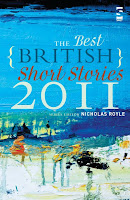
 ... Giveaways - In honour of our birthday - and of the UK's National Short Story Week - we are giving away NINE books: 4 of the books we are reviewing this month - and an extra 5 short story collections! You could win Best British Short Stories 2011, Best European Fiction 2012, the National Short Story Week charity audiobook anthology Women Aloud - and Affirm Press's Long Story Shorts set of six short story collections, which includes Barry Divola's Nineteen Seventysomething.
Visit the Competitions page to find out how to win.


439 story collections and anthologies reviewed, by our forty or so reviewers worldwide, and over 250 authors interviewed... We all do what we do for love of the short story and to spread the word about as many short story collections as possible so readers can get hold of them, demand them from their local bookshops or libraries, buy them as presents.
Four years on, we are so overwhelmed with offers of collections to review that we have had to declare a hiatus in accepting new review copies so that we can catch our breath! A good sign, we think. A very good sign! How could you help us celebrate our birthday? Tell someone about a short story collection you love. Tell ten people. Spread it around!
This month's issue includes an unprecedented seven reviews of multi-author anthologies, which means that we are bringing you short stories by more authors than ever before! From women aloud to the bride stripped bare, the gold boy and the emerald girl, the best british and european fiction, what doesn't kill you if you're with the bears or on the Paris metro in nineteen seventysomething... and...
 ... Giveaways - In honour of our birthday - and of the UK's National Short Story Week - we are giving away NINE books: 4 of the books we are reviewing this month - and an extra 5 short story collections! You could win Best British Short Stories 2011, Best European Fiction 2012, the National Short Story Week charity audiobook anthology Women Aloud - and Affirm Press's Long Story Shorts set of six short story collections, which includes Barry Divola's Nineteen Seventysomething.

Friday, September 9, 2011
Shortlistees for the BBC National Short Story Award 2011

Huge congratulations to Short Review author Alison MacLeod, one of the five shortlistees for this year's BBC National Short Story Award, announced tonight! Her fellow honorees are: Jon McGregor, MJ Hyland, KJ Orr and DW Wilson. More information here - and you can listen to all the shortlisted stories on BBC Radio 4 next week!
Tuesday, September 6, 2011
A quick word about speed
One of the most interesting things for me, as editor of The Short Review, is seeing how different authors answer our standard author interview questions. The first question "How long did it take you to write all the stories in your collection" often brings forth comments along the lines of Bret Anthony Johnston's in this month's issue: "I’ve always known that I’m a slow writer, but man oh man; looking at it this way really highlights it to an embarrassing degree." How long did it take Johnson to write Corpus Christi? Five years. Is this extraordinarily slow? Is there reason for his embarassment. Well, according to our survey, absolutely not.
So, to make Bret - and frankly all of us writing short stories - feel better, let's take a quick look:
Okay, I could go on and on...but I think you get the point. There are a number of authors who wrote all their stories in a year or two (or even six months, Warren Adler, and four months for Rob Shearman) but the majority, who didn't have a collection in mind as they wrote, took years and years. Are you a hare or a tortoise? What does this mean? What pithy conclusion can be drawn?
Perhaps just this: it takes as long as it takes. Yup.Let's leave it there.
So, to make Bret - and frankly all of us writing short stories - feel better, let's take a quick look:
Mary Akers: Let’s see, I wrote the first story back in 1997, and the last story in 2007, so the math is easy. Ten years.
Allison Amend: The earliest story was written in 1997; the last was written expressly for the collection in 2008.
Paolo Bacigalupi: The first, Pocketful of Dharma was written in 1998, the last was written in 2007, so... 9 years?
Rusty Barnes: These stories were written between 1999 and 2006.
Kevin Barry: They’d been slowly oozing from my fetid little brain onto the computer screen for the best part of seven years.
Alan Beard: Thirteen years since my first collection (Taking Doreen out of the Sky), and that took twelve years to complete.
Aimee Bender: About six years.
Regi Claire: To be honest, quite a few years (my guess is six)!
Ramola D: I think the stories that ended up in this collection were written across about twelve years.
Lise Erdrich: I could say twenty years, since that is when they first started to get published here and there.
Deborah Kay Davies: It took about 10 years altogether.
Charles Lambert: I wrote the oldest story here (Beacons) over fifteen years ago and the most recent (Something Rich and Strange) last year.
Kelly Link: Altogether, I wrote these stories over the course of fifteen years.
Alison MacLeod: Eek. Should I admit this? A ‘debut’ collection makes the author sound so new, almost virginal, but the truth is the stories in the collection were written over a period of twenty years.
Clare Wigfall: Almost a decade.
Tamar Yellin: About twelve years.
Okay, I could go on and on...but I think you get the point. There are a number of authors who wrote all their stories in a year or two (or even six months, Warren Adler, and four months for Rob Shearman) but the majority, who didn't have a collection in mind as they wrote, took years and years. Are you a hare or a tortoise? What does this mean? What pithy conclusion can be drawn?
Perhaps just this: it takes as long as it takes. Yup.Let's leave it there.
Subscribe to:
Posts (Atom)